Thursday, January 1, 2015

(mobile) Home Economics


"Chez Mobile" - our Cañon City abode
This past summer we moved into a late model (1999) two bedroom, 840 sq. ft. mobile home in Cañon City, Colorado. We've owned other mobiles, including one in pricey Boulder, Colorado that was the most comfortable, quiet and energy-efficient of all of the places we lived in our 2+ decades there. 

Our Boulder home was a real eye-opener for the two of us, as we like so many others were prejudiced against mobile homes to begin with, but felt forced into one due to financial constraints. The insulation and tight window and door seals in our mobile there translated into peak winter gas and electric bills under $100 combined, and our neighbors, much to our surprise and delight, turned out to be a mixture of Naropa and CU professors, savvy budget retirees, and Mexican immigrant families. 

We'd owned a conventional ranch house and a condo in Boulder and so were very familiar with typical operating and ownership costs, and were astonished at both how much more peaceful our mobile was and how much money owning it freed up for actual living. 

Boulder is also the epicenter of the cohousing movement in the U.S., and we've had friends who've lived in such places and visited several others. It's a concept and a lifestyle we find appealing, but as such places are nearly always new construction they are very expensive. Over time we've come to realize that manufactured home communities, especially some of the larger ones with more amenities, are, effectively, cohousing for the real (or at least other-than-upper class) world. Our friends and mentors Billy and Akaisha Kaderli offer a good overview of such communities here


View of the Arkansas River from Tunnel Drive in Cañon City


Cañon City is a town of 15,000 on the banks of the Arkansas river, about a 45 minute drive from Colorado Springs. It's a conservative place overall, but with a small, very visible and growing progressive community. Hiking and biking are fantastic, the climate
is the mildest in the state, and the cost of living is about as low as you'll find in any habitable place in the U.S. There are plenty of artists, good yoga teachers, a great deal of agriculture in and around town, a thriving farmer's market, and (important to us) lively Buddhist and Christian contemplative communities. 

Getting back to the economics, here are the basic numbers for our current mobile:

Purchase price: $16,000 (we got a bargain and it's easily worth 20K)
Annual taxes: $80
Monthly space rent: $245
Average combined monthly gas and electricity: $120
High-speed internet + phone: $50
Home and auto insurance (combined) : $60 per month 

We have a couple of excellent all-road bikes for workouts and getting around town on our errands, and our car is a 2006 Scion xA that gets 40 mpg on the highway - one of the (in)famous finance blogger Mr. Money Mustache's Top Ten Cars for Smart People

Prior to living in Cañon City we spent the better part of three years in México, and before that tried our luck in such low-cost domestic retirement havens as Silver City, New Mexico and Port Angeles, Washington, while also investigating numerous other options, including Tucson, Albuquerque, Bisbee, AZ and a few others. 

It would be difficult if not impossible to achieve the kind of rock-bottom low overhead I've detailed here in any of these places, due primarily to the much higher value of real estate as well as transportation costs. Mobile home space rent in, say, Tucson or Albuquerque, which are considered U.S. average cost cities, would run more like $450-550 per month. Our mobile home park is an easy 1 to 2 mile bike ride to the supermarket and the heart of downtown, with the Riverwalk off-road trail system and great road riding out our door; we could easily go for several days without getting in the car except during the worst weeks of winter. Contrast that with any of these other car-centric cities where we'd probably need - or at least often want - a car per person, and would be filling them both up with gas multiple times per month. 

We're certainly spending a bit more on food here than we did in México, but being a 45 minute drive from a Costco and Trader Joe's and having fabulous local organic produce from May-October at prices that are about a third of what they get up in Boulder go a long way towards keeping things in check. 

Our biggest concern, financially and in terms of quality of life, in returning to the U.S. from México was health care and insurance, and this remains the one area that lends a major asterisk to our hope to remain in Colorado for the long run. In México we had great catastrophic insurance for a few hundred dollars a year total for the both of us and happily paid out-of-pocket for routine doctor and dental visits at ~$20-25 a pop. Colorado is one of the better, more progressive states in terms of its embrace of ACA/Obamacare and Medicaid expansion, but all we are eligible for, due to our low income, is Medicaid, and that basically means hospital-only coverage with very poor access to doctors. Looking ahead, it's obvious with the Republicans in charge of both chambers of congress that attacks on ACA and Medicaid will continue, so we know that we'll have to continue to monitor things closely and continue to get dental work and other care done during periodic México trips, while also knowing that we need to be ready for a long-term return to life down there at any point, should the U.S. system continue to implode. 

That major "asterisk" aside, our overall cost-of-living in Cañon City is on par with, and probably a bit lower than, what we were spending living a car-less life on foot at Lake Chapala, where we paid an average of $600-700 a month in rent for modest-sized furnished dwellings. The other thing we really notice in the brief time since we've been back N.O.B. ("north of the border," in expat lingo) is that while inflation in food and energy costs as well as residency visa fees was a stark reality in México we seem to be seeing flat-to-declining costs in many areas here, with the current cost of gasoline (we just filled our 10 gallon tank for $20!) being perhaps the starkest recent example. 

Setting costs aside there's the most important issue of all, at least for us, and that's quality of life. In our experience it's really hard to equal the ease of making friends and depth and diversity of people one meets in such expat havens as Lake Chapala and San Miguel de Allende. A lot of this has to do with the fact that those who choose expatriate life are by definition much more curious about the world and adventurous than most. We've been exceptionally fortunate in having a community of friends based on deep common interests in sustainable living, organic agriculture, progressive politics, outdoor adventures and contemplative practices here in Cañon City, so that for us, the México and Colorado options are pretty much on par in terms of quality of life, but with the huge difference of easy access to wilderness, silence and solitude and proximity to aging parents and old friends here in the U.S. that make being here the right choice for us, for now. 


Tuesday, August 7, 2012

Lake Chapala & San Miguel revisited

Having gushed so enthusiastically about many aspects of life in San Miguel de Allende, I feel obliged to share some of the dark side, so to speak.

Air Pollution and Urban Intensity


Of course it's all a matter of perspective, and ours is shaped by moving here from an isolated, beautiful small town (population 10,000) in the mountains of New Mexico, with clean air and endless trails for hiking and biking. Before that we lived at Lake Chapala for two years, and while the carretera (the highway that is the only way into or out of the area) is heavily trafficked, the lakeshore villages themselves are mellow and walkable, while being on water and a small population keeps the air reasonably clean.


Recently it's come to our attention that there's a substantial cluster of brick making ovens located all around the periphery of San Miguel, with the biggest concentration just south of the city limits. These are illegal businesses that survive because they provide much-needed employment, but the fumes they produce, especially with the truckloads of computer parts, plastics and tires that city-owned and operated trucks have been delivering to them, are very toxic. Here's a video shot by a local group trying to address this issue:


http://www.youtube.com/watch?v=ISqd85i88tw&feature=youtu.be


Unlike Mexico City, where sophisticated air pollution measurement is in place (thereby allowing one to know that every day spent there is the equivalent of smoking 40 cigarettes), air pollution in San Miguel is hard to quantify. Anecdotal evidence from friends and local doctors is not encouraging, and for my part long-standing sinus issues have certainly gotten worse since we've moved here, while my wife, who rarely has so much as a cold, has experienced frequent headaches and coughing.


Brick ovens aside, we lead an exceedingly urban existence here without a car, due to the unique layout of San Miguel and its tremendous growth in recent years. We avoid walking on the major streets when possible, but often that isn't possible and even the back streets have traffic at all times of day except for very early morning or very late at night. The streets here are also all cobbled, uneven and full of gaps, holes and protruding objects, while sidewalks are so narrow that two people can't walk side by side and passing often requires stepping out into the street and dodging traffic. You have to be on your toes and looking down and around at all times. It's far more demanding than Lake Chapala or anywhere else we've been in Mexico - closer really to Bali or Chiang Mai in terms of intensity and need for constant vigilance. There are a couple of pocket parks in town and the wonderful botanical gardens a steep half-hour hike away, but that is it for relief from traffic, buses spewing diesel fumes and dodging people and vehicles while walking around. So while greater San Miguel is less than 200,000 people, it has an intensity of "urbanness" that's easily the equal to, say, Paris or New York, albeit in a uniquely third-world way.


The expat community: a world of well-heeled coming and goings


San Miguel is even more transient in its expat population than Lake Chapala, with people coming and going not just for high and low season but constantly. "Long term" in rental ads here means 3 months or more (vs. a year + anywhere else we've lived), and easily half the people we've met thus far are just back from trips to the U.S., Asia or Europe or gearing up for them. 

The commitment phobia we got used to at Lakeside for any sort of scheduled or recurrent activity, from book groups to meditation, yoga or other classes, is even stronger here, and that plus all of the coming and going has a profound effect on one's emotional investment in potential friendships. All in all, what we're seeing is that the expat groups here and at Lake Chapala are far more similar than they are different. 

Preliminary conclusions

I've said before that the snowbirds (and "sweatbirds" - those who come to the highlands of Mexico during the rainy season to escape the heat of Texas, Arizona or Florida) have it right, and I still think that's the case, at least for us. That said, being able to afford to have two home bases, and dealing with the attendant costs, is a huge hurdle for many, including ourselves. 

The choice between San Miguel de Allende and Lakeside boils down to opting for a bustling city with plenty going on (far too much, when it comes to pollution and traffic), vs. generally pretty sleepy villages with perhaps too little activity, choice of food and restaurants, culture, etc. but where one has a sense of living in a calming natural setting,  yet with easy access to an airport and a city of 6 million with every urban amenity imaginable. From my point of view the ideal would be to spend time in both of these places, never own property in either, travel light and keep one's options open. Regarding the much-publicized dangers, I'm a lot more concerned about breathing the air in San Miguel than I am worried about the statistically miniscule chance of being a victim of narco crime either at Lake Chapala or here. Heck, it's the prospect of heading back to the U.S. that really terrifies in that regard (remind me not to attend any midnight movie showings or visit any Sikh temples.....), while the real terror sets in when I think of the prospect of negotiating the health care and insurance systems. Those very real fears notwithstanding it seems clear that if we can find a way to be U.S. based visitors to Mexico we'll be far happier in the long run. 


Sunday, July 8, 2012

Simple living

I was looking for my keys the other day and realized it's no wonder they're easily lost, since all that's on the chain is one house key, a small key for our travel Pac Safe and a tiny flashlight. That kind of minimalism characterizes our lives down here, and it's quite a change from what we used to think of as frugal simplicity in our former lives as "high class trailer trash" in New Mexico.

We're in a comfortable but certainly not luxurious two bedroom apartment, and though we've had to buy kitchen stuff, a coffee table, TV and DVD player and such, the big basic items (applicances, bed, dressers, etc.) are provided. Rent is $500 a month and that includes electricity and (non potable) water. Gas (propane) runs around $20 a month at the moment, though that's sure to double or triple in winter. The TV, internet and phone service bundle from Telecable costs us 499 pesos (about $38) a month. Botttled water for drinking runs about $14 a month.

Missing from these fixed expenses are a bunch of items we took for granted back home: all things car related (plates, insurance, gas & maintenance), homeowner's insurance and umbrella policy, high-deductible health insurance policy, property taxes, sewer and water bill, trash bill, Netflix, on and on.

Food and meal preparation have also gotten very simple. In isolated Silver City NM I maintained a large pantry with staples bought on infrequent trips to Costco and Trader Joe's in Tucson (3.5 hours away), plus a freezer full of grass fed beef and green chile. Here we have a small fridge that's more than adequate for our needs, since we can buy just-picked fruit and veggies as needed year 'round.

We usually eat breakfast and a light dinner (e.g. soup and salad, or quesadillas & nopales) in and have our main meal, comida, out. That's probably the biggest change from home, where even the cheapest restaurant meals were a strain on the budget.  Here, in contrast, is yesterday's comida, eaten at a great little restaurant two blocks from here:

 Chicken in mole negro with rice, beans and handmade tortillas

Erin's platillo: shredded beef in chipotle chile sauce

Total cost for this meal (including a drink, tax and tip): 90 pesos, or about $6.75. 

Lest I come off as an unabashed (or uncritical) Mexico booster, let me say that there are many, many things we miss about the U.S., and we're by no means sure that living here will be viable for us long-term. We never wanted to be full-time expats, and the nearly three months we've spent here (which feel like six or nine months, given the stressors) haven't changed our minds.

We're here primarily for economic reasons, and I think you can see from this post how much easier it is to live on a Social Security level income here than in even the cheaper parts of the U.S. Interestingly the few folks we know who do manage to live with a similar level of joyful frugality back home do so by living in a sort of informal cohousing that I believe was common before the post-WWII consumption boom. These are people who live in the same mobile home park or apartment complex who share vehicles, Costco memberships, shopping runs and major applicances. When and if we do return to the U.S., we'll be looking for that kind of community to join. 


Sunday, July 1, 2012

The glorious rainy season

The rainy season arrived right on schedule in mid-June, and we've had some spectacular lightening shows and really good soaking rains since then.

This pic (low quality because I only had my iPod Touch with me) is from today's walk around town:


Highs have dropped a good 10-15 degrees to around 80, nights are in the 50's and mornings are cloudy and cool, with a nurturing humidity in the air that brings back happy memories of time spent in spring years ago in southern France.

Everyone I know who's lived long-term in Mexico far prefers the summer "off" season to the dry and often frenetic winter high season. For our part we're feeling especially blessed to be here, as we watch our old stomping grounds (Colorado and New Mexico) aflame with record high temperatures. Hoping that some of our cooling rain makes it north to those in need.

Monday, June 18, 2012

Magical Pátzcuaro

Good friends of ours from Colorado recently moved full-time to the lovely pueblo magico of Pátzcuaro, a town of about 75,000 that's about 45 minutes West of Morelia, the capital city of the Mexican state of Michoacán. We've been wanting to visit for a long time, and finally made it over for a brief stay. 


Heading over from San Miguel, which was at its absolute driest and dustiest, with humidity in the single digits, to Morelia was a welcome change-of-pace, with rain clouds on the horizon and lush pine forests as we headed up (Pátzcuaro is at about 7400 feet). The scenery around Lake Pátzcuaro reminds me very much of Lake Atitlán in Guatemala, with shadows and light playing on volcanic mountains, the calm beauty of water and a tremendous richness of indigenous culture. 


Pátzcuaro is the homeland of the Purhépecha Indians, and as with Oaxaca and Chiapas the strong presence of an indigenous culture means far greater cultural, artistic and culinary interest for visitors.


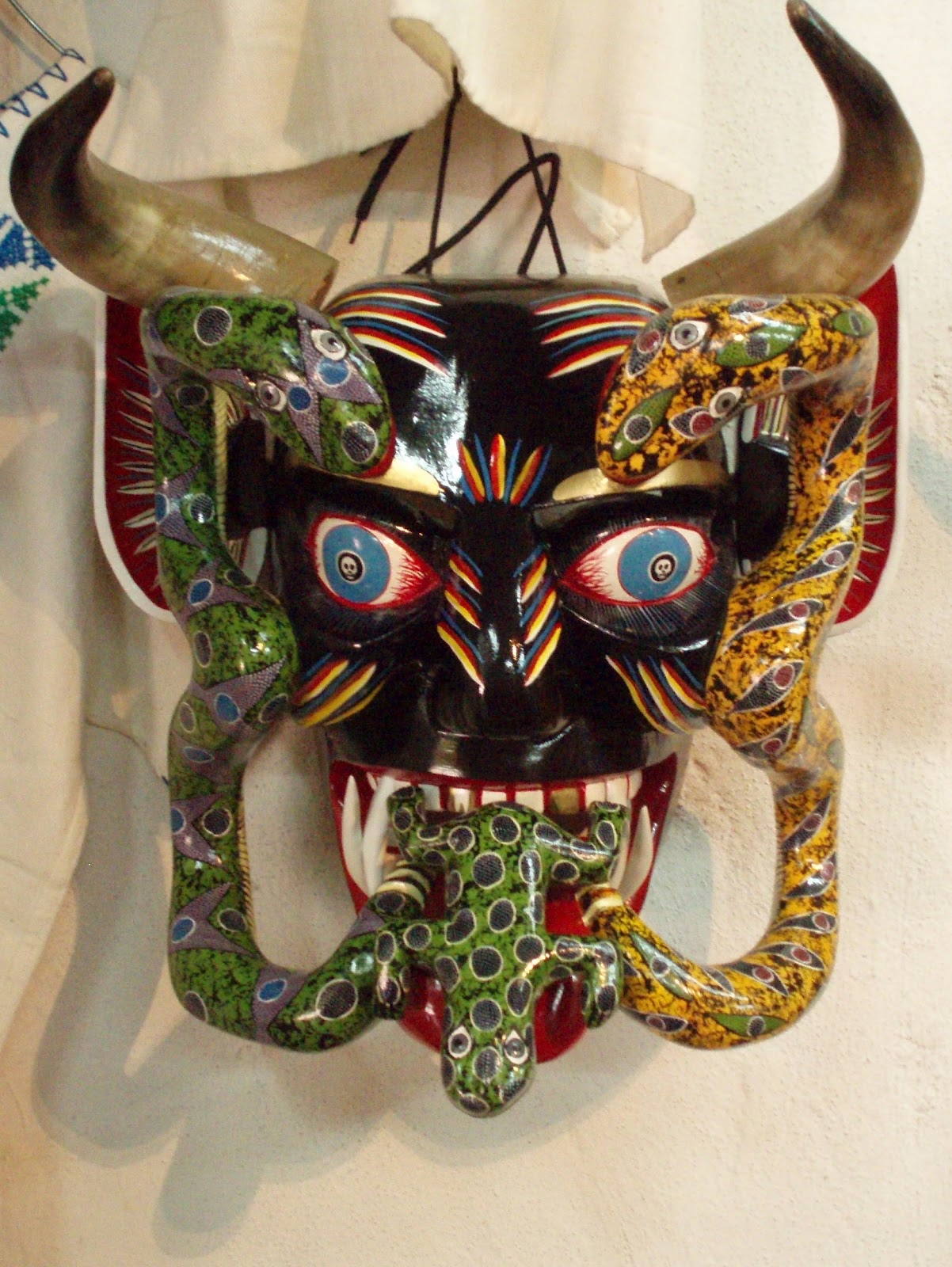
Pátzcuaro, while a small town compared to Morelia (population ~ 1 million), is the trading and commercial center for a string tiny villages surrounding the lake, each of which specializes in a particular craft, ranging from copper to mask-making and furniture. We were most interested in masks, and our friends Mark and Nancy knew just where to take us: the home of the renowned Orta family, master mask-makers who are multiple first-prize winners of Mexico's National Mask Maker competition. We bought a small piece but were sorely tempted by their larger works, which are as intricate in their craftsmanship and daring in their imaginitiveness as any art we've seen. Here are a couple of examples:


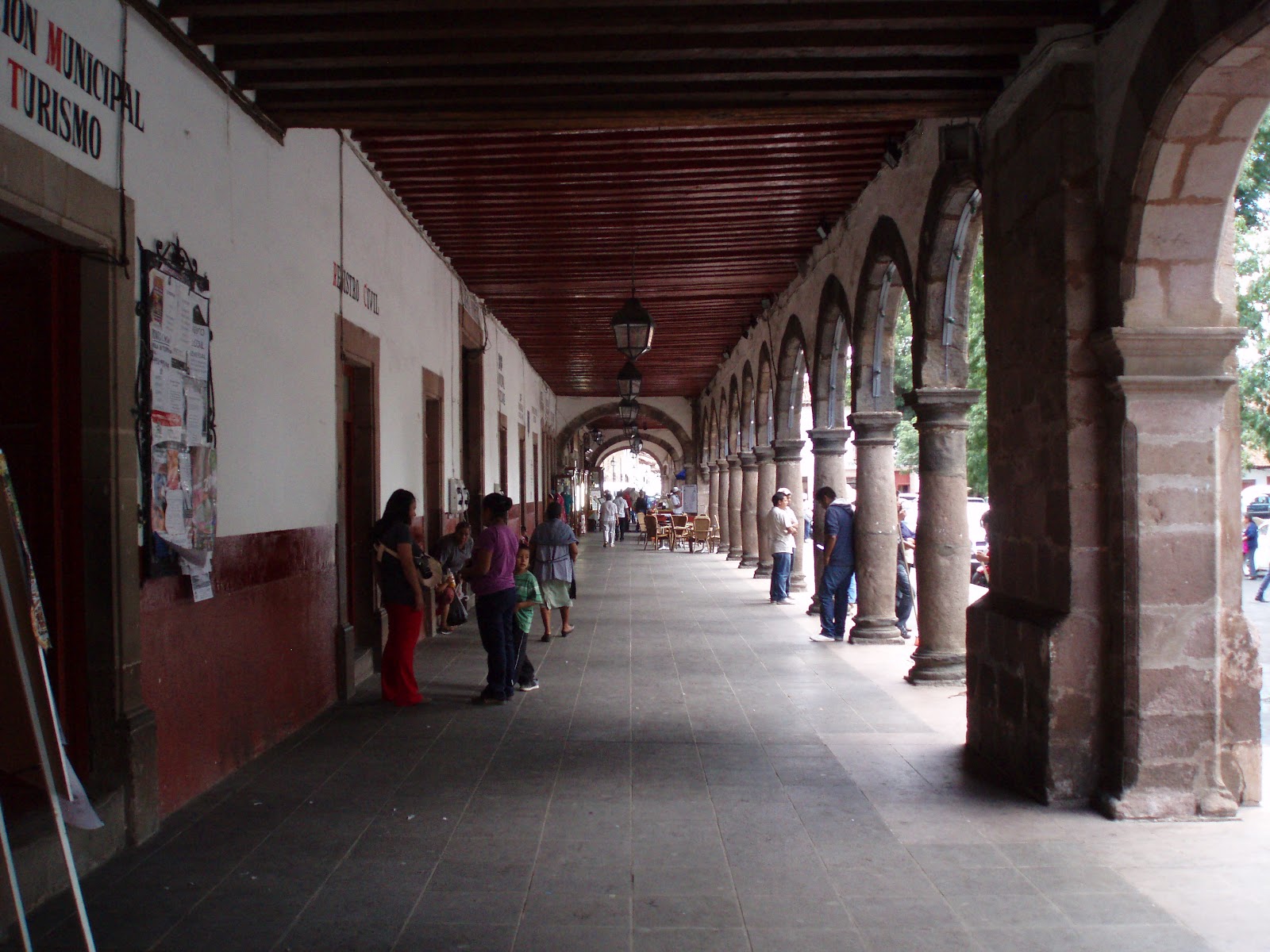
The town center is like a mini-Morelia, with porticos everywhere, two beautiful plazas and a very active café society that feels very European, with people meeting in outdoor venues for coffee and conversation at all hours.


The central mercado is so densely-packed and bustling you'd think you were in a much larger city, while the variety of produce and unbelievably low prices remind you that you're in Mexico's agricultural heartland. Check out the prices posted on this photo (remembering that they're per kilo - which is 2.2. pounds - and that the peso is currently at nearly 14 to the dollar):


Our friends who live here estimate the local expat population at around 300 people. We met a nice cross-section of that group at a birthday party and ran into others on the street and in cafés. As you might expect it's a crowd thick with artists and patrons of the arts, very progressive and seriously into learning more about Mexico and supporting indigenous cultures. The gated community and don't-speak-a-word-of-Spanish-don't-want-to sets so frequently encountered in places with large gringo populations are nowhere to be seen. 


Now while Erin has a pretty high tolerance for Christian churches, I've seen enough bleeding Jesuses and dusty statues of the Virgin in Mexico to last me a lifetime (if I were a theist I'd want to be on the other side of the world, in Tantric India with its pantheon of sexy gods and goddesses). Being naturally subversive I tend to have more appreciation for the Mayan adaptation/usurpation of Christian elements into their native traditions, but I didn't know that in Mexico and throughout Latin America there's a special class of saint worship for the poor and the downtrodden, that neatly usurps Catholic imagery: the cult of Santa Muerte. We visited her shrine on the lake, and to say it was a wee bit creepy would be an understatement:


Entrance to the Sanctuary

 The welcoming committee - no red-eye correction needed


This one could be from India's Kali cult - check out the human thighbone flute and human heart in a bowl. Simply charming.


Far less grisly is the art of stone carving, and one of the villages has a very industrious studio who displays their wares on the roadside 24/7. Apparently these things are too heavy to be easily stolen, and the theory seems to be to go ahead and make one (or more) of everything you could imagine someone wanting:


The few days we spent in and around Pátzcuaro made us realize once again that Michoacán really is, as many Mexicans have said, the most complete representation of the country as a whole of any Mexican state. You have gorgeous deserted beaches, jungle, twelve thousand foot high peaks awash in Monarch butterflies, lakes and rivers, ancient indigenous cultures, modern cities with a thoroughly European feel and a depth and diversity of agriculture and cuisine that are unsurpassed. 


Pátzcuaro itself is clearly a power spot - a mesmerizing place - and while it's too cold in the winter and has far too small of a gringo population to work for us as a home base it's a place we plan on returning to for extended visits whenever we get the chance. 


Sunday, May 13, 2012

A walk around town in the hot season

Just across the busy Salida a Celaya a couple of blocks from our house are narrow tree-lined streets that lead to one of wonderful green oases of San Miguel, Juarez park. 


By now the Jacarandas with their profusion of deep purple flowers are done for the season, but bougainvillea is still in full bloom. 


While the neighborhood around Juarez Park is one of the ritziest in San Miguel, with the magnificent Rosewood Hotel and its million-dollar condos nearby, a block up the hill is the El Chorro park, where women still wash clothes by hand the old way every day. 


Up the hill through centro and just south of the main square is one of our favorite indoor markets, Ignacio Ramirez. The place is packed to the gills with produce vendors, meat shops, flower stalls, wonderful fondas where a complete meal of mole, rice and beans with handmade tortillas can be had for about $3.50, crafts and on and on. 


Today we made it a bit further inside the market to an area where local women were selling truly local items: homemade blue corn tortillas, nopales (paddle cactus) salad, and a host of herbal remedies:


Back home with a full daypack containing 4 large Paraiso mangoes, a big ripe papaya, jicama, carrots and limes. The lot cost me just over $3, and I suspect that was the gringo price. I'm not complaining. 


Highs in the low 90's now, lows in the 50's. We've had a few teaser rain showers and the clouds are building by the day, so hopefully the rainy season will arrive on time, mas o menos, by mid-June. This is the hottest time of year here and many gringos head back home, but we're appreciating the somewhat slower pace (compared to high season mind you - it still feels mighty busy and urban compared to Silver City, New Mexico!). 


Wednesday, May 2, 2012

Outwardly Simple, Inwardly Rich

The courtyard at Lifepath Center, San Miguel de Allende, home of the SMA Meditation Community

Unforeseen challenges with the place we'd hoped to rent have caused us to choose another apartment as our first home in San Miguel. It's in our favorite colonia - San Antonio - just a few blocks from the guest house that was our home for a month or so this past winter. 


We're in a cozy one bedroom apartment whose best feature is a sunny and peaceful studio just off the bedroom, with enough room for the two of us to do yoga and meditate, for a massage table for Erin, and for a small desk for our laptop. The place is owned by a wonderfully laid-back Canadian fellow who's lived here for decades. There are only 8 apartments in the complex, occupied by an interesting mix of gringos and Mexicans, many of whom have been here for a long time. 


Our rent is $325 a month plus utilities, for a humbly but fully furnished place. We've spent a couple hundred dollars fixing the place up and it's been well worth it. With that kind of rent we simply won't worry about taking taxis (at 25 pesos or about $2 a pop) or the local bus (5 pesos) whenever we need to. Electricity for this place runs about 50 pesos a month, gas around $30, wireless internet and basic cable are included in the rent, and our land line runs us about $18 a month. We'll go through more gas for a couple of months in January and February when it's cold, but other than that no heating or cooling needed (or possible!). 


With no car and no need or desire for one, no health insurance premiums and great health care available out-of-pocket for a tiny fraction of U.S costs, and food of stunning freshness and quality at one third to one half of U.S. costs we clearly can and will live well here for less than half of what we were spending to survive in one of the lowest cost parts of the U.S. 


Our place is hidden away behind a high steel gate and is down a one-way street from the busy main road. There are the usual Mexican village and city sounds but also long stretches of quiet. About the only major "sonic risk" is that we're only one long block from the San Antonio church, which hosts occasional fiestas (the most famous of which is El Dia de los Locos: http://www.redguide.com/article/mexico/zocalo/going-loco-in-the-zocalo), during which the cohetes are sure to be blasting from pre-dawn till late at night. Oh well, at least most noise in Mexico is happy noise, and as more than one expat has pointed out things will be plenty quiet when you're six feet under, so enjoy. 


I don't think I'll be able to resist posting at some length about the food scene in this neighborhood, which is truly astonishing. If we limit ourselves to just places that are within a 10 minute walk from us there are at least 50 or 60 worthy options, from a dozen excellent taco stands (including a half-dozen or so tacos al pastor specialists), superb hardwood-roasted chicken, tapas, Argentinian steakhouses, gorditas, tamales, comida corrida places offering set price (usually 40-45 pesos or about $3-3.50) complete meals, two first-rate cheese stores, a world-class French bakery and even a very good Chinese restaurant. 


We're also a short walk from the lovely Juarez park, and from there steep cobble stoned streets lead up to the best overlook of the city. El Jardin, the focal point of centro is 15 minutes away, while the Lifepath Center where the meditation community that is central to our lives here meets is less than a 10 minute walk. It should go without saying that tiendas selling fresh fruit and vegetables are everywhere. 


Hopefully you can see why I chose Duane Elgin's well known definition of Voluntary Simplicity as this post's title. In our case (as for so many other people in this economy) the simplicity of means we must live within isn't entirely voluntary, but given those constraints life here promises to be inwardly (and outwardly) rich in ways that simply wouldn't be possible in any place we know of back home.